Puppy basics
Your Toy Poodle's first week home
Your Toy Poodle comes home at about nine weeks, small, bright and a little unsure of everything. A calm, steady first week settles its nerves and sets the tone for the months ahead.
Nelson and Kim, Curious Tails · AVS licence AS24J00046 · 14 Jul 2026
How do I settle a new Toy Poodle puppy in its first week?
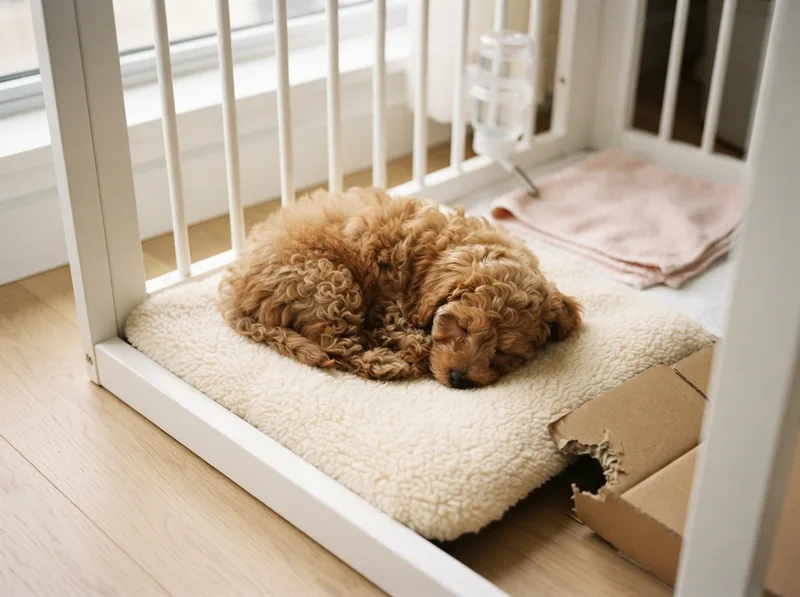
Keep everything calm and predictable. Set up a quiet den, a fixed pee-pad spot and a simple routine of small meals, toilet trips, short play and lots of sleep, and let your puppy explore at its own pace. Keep the same food, keep visitors few, and book a settling-in vet check. Your puppy comes home with a starter kit and support, so week one is never yours to handle alone.
What should I prepare before my puppy arrives?
Get the home calm and ready before collection day. Set up a quiet den, a fixed pee-pad spot and a small playpen, put away loose cables and small objects, and have the same food your puppy is already eating on hand. A prepared home means day one is about settling, not scrambling.
A Toy Poodle is tiny, roughly two to three kilograms fully grown, so small gaps behind furniture and under cabinets matter. Block them off before your puppy starts to explore, and keep fresh water down at all times.
When we deliver your puppy, we set up the playpen for you, so the main space is ready the moment it arrives.
Before-arrival checklist
- A quiet den or crate to retreat to
- A fixed pee-pad spot from day one
- Cables, gaps and small objects put away
- The same food it is already eating
- Fresh water always available
- A calm house, visitors kept for later
What should I do on day one?
On day one, do less than you think. Let your puppy come to you rather than passing it around excited hands, show it the pee-pad and the den, and keep the household quiet. A short, gentle play followed by a long nap is a perfect first day.
A quieter appetite on the first day is common while everything is new. Offer small meals and fresh water, and do not worry if your puppy is more interested in sleeping than eating.
Handle your puppy gently and let it sniff around at its own pace. Poodles are curious, and yours will explore happily once it feels safe.
How do I get through the first three nights?
Expect some crying for the first night or two. Your puppy has just left its littermates, and the noise is loneliness, not bad behaviour. Keep its den close to you at first, then move it gradually toward its permanent spot across the week.
End each day with a calm, boring last toilet trip, no excited play, so bedtime signals rest. If your puppy cries, avoid rushing in with fuss, since a big reaction teaches it that crying brings company.
Most Toy Poodles settle within a few nights once the routine starts to feel familiar. Predictability does the hard work for you.
Should I change my puppy's food?
Not in the first week. Keep the exact same food your puppy is already eating, because a sudden change on top of a new home is the most common cause of loose stools. Feed small, regular meals, three to four times a day for a young Toy Poodle.
If you want to switch brands later, do it slowly over about a week, mixing in a little more of the new food each day. For a fuller guide, see what to feed a Toy Poodle puppy.
A tiny Toy stomach needs steady, frequent meals. Missing meals can leave a very small puppy low on energy, so keep mealtimes regular even while everything else is settling.
Week-one feeding
- Keep the exact same food at first
- Small meals, three to four a day
- Fresh water always available
- Change food slowly, over a week, if at all
- Regular meals keep a tiny Toy's energy steady
A gentle routine your Poodle will thrive on
Poodles are among the brightest, most trainable breeds, and that intelligence comes with sensitivity. A predictable rhythm of meals, toilet trips, short play and sleep is exactly what a clever, sensitive puppy needs to feel secure.
Start the routine on day one and keep it steady. This is the thinking owner's dog, so gentle structure suits it far better than a chaotic, over-stimulating first week.
Protect your puppy's sleep. Young puppies sleep for much of the day, and that downtime is when they grow and process everything new. A well-rested Poodle settles faster and learns quicker.
Toilet trips and early crate comfort
Take your puppy to the pee-pad after every meal, nap and burst of play, and quietly reward the moment it toilets in the right spot. Frequent, well-timed trips teach the habit faster than any telling-off. Our potty training guide has the full routine.
Make the crate a happy den, never a punishment. Feed meals inside it and let your puppy wander in and out so it becomes a place of rest. Our crate training guide walks through it step by step.
Gentle nibbling and teething are normal this week too. Redirect sharp puppy teeth onto a toy rather than hands, calmly and every time.
When should the first vet visit be?
Book a settling-in vet check soon after your puppy comes home. The visit confirms your puppy is healthy and sets up its ongoing vaccination schedule. Core puppy vaccinations run at weeks 6, 8 and 12, with an optional fourth at week 16 if your vet advises, then an annual booster.
Your Toy Poodle comes home at about nine weeks, roughly a week after its second vaccination, already microchipped and vet-checked with its vaccination records. Deworming happens alongside each vaccination visit.
First-time owner? The AVS pet ownership course is a good grounding, and we complete your dog licensing paperwork at purchase.
What's normal, and when should I worry?
Sleeping a lot, some first-night crying and mild shyness are all normal as your puppy settles. What is not normal is repeated vomiting, ongoing diarrhoea, refusing food entirely, or a limp, unusually flat puppy. Those are reasons to call your vet or message us without delay.
Small Toy breeds can dip in energy if meals are missed or if they get over-tired, so keep meals regular and rest protected. Trust your instinct: if something feels off, it is always better to ask early than to wait and see.
Normal vs worth a call
- Normal: lots of sleep and naps
- Normal: some crying the first night or two
- Normal: mild shyness, a quiet first-day appetite
- Call: repeated vomiting or ongoing diarrhoea
- Call: refusing all food, or very low energy
- When unsure, message us or your vet
Everything you need is included
Your Toy Poodle comes with a 30-item starter kit, free home delivery and playpen setup, so you are not scrambling for supplies in week one. Its licensing is handled at purchase, and if anything worries you in the first few days, our five-day bring-back-if-sick support has you covered.
Beyond that first week, our care advice is a message away, for life, so you can always ask us the small questions that come up. See what is included in the price for the full list.
Comes home with
- 30-item starter kit
- Free home delivery and playpen setup
- Licensing paperwork completed at purchase
- 5-day bring-back-if-sick support
- Free care advice, for life
Looking past week one
Walks and meeting other dogs wait until your vet confirms your puppy's vaccinations allow it, so the first week stays indoors and calm. Use the time to bond and build the routine.
Start building short, gentle time alone now, so your Poodle grows up confident on its own and you head off separation anxiety later. When your puppy is ready, a little easy training gives that clever mind a job.
A steady, gentle first week makes everything that follows easier. Get the routine right now, and the months ahead are far smoother.
About the authors
Written by Nelson and Kim
Nelson and Kim run Curious Tails, the AVS licensed pet shop (licence AS24J00046) behind Poodle.sg, at 2 Balestier Road #01-701, Singapore 320002. They have placed 100+ Toy Poodles with Singapore families and give every buyer their WhatsApp line for free care advice, for life. Everything on this page comes from that day-to-day experience, not from a content mill.
Frequently asked questions
What age does a Toy Poodle come home?
At about nine weeks, roughly a week after its second vaccination, once it is eating well and settled. Younger than that is too soon to leave the litter.
My puppy cried on the first night. Is that normal?
Yes. A puppy that has just left its litter often cries for the first night or two. Keep its den close by at first, end the day with a calm last toilet trip, and avoid rewarding loud crying with fuss so the nights settle quickly.
Should I change my Toy Poodle's food when it comes home?
Not in the first week. Keep the exact same food to avoid loose stools while everything else is new. If you want to change later, do it slowly over about a week, mixing a little more of the new food in each day.
Is it normal my puppy won't eat much on day one?
A quieter appetite on the first day, while a puppy adjusts, is common. Offer small regular meals and fresh water. If it refuses food repeatedly, seems very flat, or has vomiting or diarrhoea, contact your vet, since small Toy breeds can dip in energy if meals are missed.
When should the first vet visit be?
Book a settling-in check soon after your puppy comes home, both to confirm it is healthy and to set up its ongoing vaccination schedule. Core puppy vaccinations run at weeks 6, 8 and 12, with an optional fourth at week 16 if your vet advises, then an annual booster.
What is normal, and when should I worry?
Sleeping a lot, some first-night crying and mild shyness are all normal as a puppy settles. Repeated vomiting, ongoing diarrhoea, refusing food, or an unusually flat, limp puppy are reasons to call your vet or message us promptly.
Do I need to buy a lot of supplies?
No. Our Toy Poodles come with a 30-item starter kit, free home delivery and playpen setup, so the essentials are covered from day one, and our care advice is a message away for life.
Meet your Poodle
Come say hello at Balestier
2 Balestier Road #01-701, Singapore 320002 · Weekdays 12pm–6pm · Weekends 10am–6pm. Or message us first: tell us about your home and routine, and we'll tell you honestly if a Poodle fits.
Still deciding?
Read the price guide first: every dollar explained, no surprises at the shop.
See the price guide