Puppy basics
How to potty train a Toy Poodle in an HDB flat
Toy Poodles are bright, fast learners, which makes toilet training easier than most breeds, as long as you stay consistent. Here is a routine built for a flat with no yard.
Nelson and Kim, Curious Tails · AVS licence AS24J00046 · 14 Jul 2026
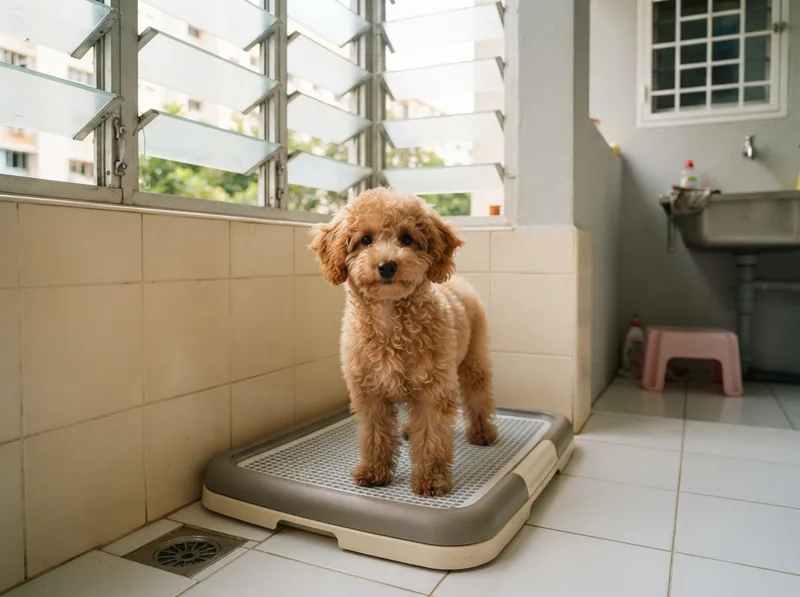
How do I potty train a Toy Poodle in an HDB flat?
Set up one fixed pee-pad spot, take the puppy to it after every sleep, meal and play session, and reward the moment it goes in the right place. A Toy Poodle is one of the brightest breeds and grasps the idea fast, but a young puppy has a small bladder, so frequent trips and a steady routine matter more than anything.
Should I use a pee pad or take my puppy outside?
In an HDB flat, a fixed pee-pad spot is the practical place to start. A young puppy cannot hold on long enough to make it down the lift in time, and the core vaccination course (around weeks six, eight and twelve) is still finishing in the first weeks home, so an indoor spot keeps things simple and safe.
This is not a compromise. Pad first, then move to grass later is a calm, low-stress path that suits flat living. Plenty of Singapore owners keep an indoor pad permanently for late nights and rainy days, and there is nothing wrong with that. If you are weighing up the wider practicalities, our guide to living with a Toy Poodle in an HDB flat covers the daily rhythm.
Setting up one fixed toilet spot
One spot, kept in the same place, is the single biggest thing that makes training stick. Pick a low-traffic corner that is easy to mop, away from the food and water bowls and away from where the puppy sleeps, because dogs instinctively avoid soiling near either.
Lay the pad down and leave it put. An attractant spray can help a new puppy understand that this is the right place to go. Moving the pad around, or having two or three casual spots, only teaches the puppy that anywhere is fair game.
Pad setup checklist
- One fixed, low-traffic corner
- Easy-to-clean flooring
- Away from food and water bowls
- Away from the sleeping area
- Attractant spray to mark the spot
- Never move it once chosen
How does the crate method speed things up?
The crate works because a puppy will not willingly soil the place it sleeps. A right-sized crate teaches the puppy to hold on for short stretches, which builds real bladder control instead of just cleaning up after the fact. The moment you open the crate, carry the puppy straight to the pad, wait, and reward the instant it goes.
Size the crate for turning around and lying down, not for a bedroom with a toilet corner. Too much room and the puppy simply picks an end to use. For longer stretches when you are out, a playpen with the pad and bed inside gives space without undoing the lesson. Our note on crate training a Toy Poodle walks through the gentle setup.
A potty schedule by puppy age
How often you take the puppy out is set by its age, not by guesswork. At eight to ten weeks, offer the pad every one to two hours, plus after every sleep, every meal and every play session. By three to four months the bladder holds longer and you can gradually space the trips out. By around six months, most Toy Poodles are largely reliable if the routine has stayed steady.
A useful rule of thumb: a puppy can hold on for roughly its age in months plus one, in hours. A two-month-old puppy tops out near three hours during the day, less when it is active. Getting the first weeks right pays off, so our guide to settling a new puppy in during its first week is worth a read alongside this one.
Schedule by age
- 8-10 weeks: every 1-2 hours
- After every sleep, meal and play
- 3-4 months: space trips out slowly
- ~6 months: largely reliable
- Hold time (hrs) is about age in months + 1
- Keep the routine identical daily
What is the plan for night-time trips?
Give the last toilet trip right before bed, and lift the water bowl an hour or so earlier in the evening so the bladder is emptier overnight. A very young puppy may still wake needing to go, and that is normal for the first few weeks.
Keep the overnight trip boring on purpose. No play, no chatter, straight to the pad and straight back to the crate. Keeping the crate near your bed at first means you hear the early wriggle before it becomes an accident, and the wake-ups fade as the bladder matures.
How fast do Poodles learn toilet training?
Poodles are among the most intelligent and trainable breeds, so they grasp the concept of a fixed toilet spot quickly, often within days. What takes longer is reliability, because that depends on a small bladder growing up, not on the puppy understanding the rule.
That intelligence cuts both ways, and it is worth being honest about. A bright puppy also learns bad shortcuts fast if the routine is loose, so a missed trip or an uncleaned patch can set a habit just as quickly as a good one teaches the right one. Consistency on your part is the real lever here, not the puppy's willingness. If you enjoy that side of things, a Poodle rewards it, and our overview of how quickly Poodles pick up training shows where that clever streak really shines.
Why does my puppy keep having accidents?
Accidents are almost always a timing failure, not defiance. Usually the trips are spaced too far apart for a small bladder, a pre-pee signal like sniffing or circling was missed, or old scent is quietly drawing the puppy back to a spot. Clean every accident with an enzyme cleaner so nothing lingers to invite a repeat, and never scold after the fact, which only teaches a puppy to hide rather than to hold on.
Setbacks after early success throw owners the most. A puppy that was reliable and then regresses has usually hit a teething or growth phase, or the routine quietly slipped as everyone relaxed. Tighten the schedule for a week or two and it typically comes back. If it persists, or comes with changes in drinking or straining, a vet health check rules out a urinary issue.
Moving from the pad to outdoors later
Once the vaccination course is complete, you can start teaching your Poodle to toilet on grass at the void deck or a nearby patch. There is no rush, and many flat owners happily keep both options going for good.
Shift the pad a little closer to the door over several days, then out to the grass, using the same cue word you have said all along. Reward outdoors the instant the puppy goes, exactly as you did on the pad, and the habit transfers naturally.
Keep exploring
About the authors
Written by Nelson and Kim
Nelson and Kim run Curious Tails, the AVS licensed pet shop (licence AS24J00046) behind Poodle.sg, at 2 Balestier Road #01-701, Singapore 320002. They have placed 100+ Toy Poodles with Singapore families and give every buyer their WhatsApp line for free care advice, for life. Everything on this page comes from that day-to-day experience, not from a content mill.
Frequently asked questions
How long does it take to potty train a Toy Poodle?
Poodles are bright and grasp the idea within days, but full reliability is about bladder maturity, so plan for a few weeks to a few months. With a steady routine, most Toy Poodles are largely dependable by around six months. Consistency on your part is the main factor.
Are Poodles easy to potty train?
Yes, relatively. The Poodle is one of the most trainable breeds and learns the concept fast. The catch is that a bright puppy also picks up bad shortcuts quickly if the routine is loose, so the challenge is your consistency, not the puppy's ability.
Should I use pee pads or take my puppy outside?
In an HDB flat, a fixed pee-pad spot is the practical start, especially before the vaccination course is finished and while a young puppy cannot make it down the lift in time. You can transition to outdoor toileting later using the same cue word.
Why does my puppy keep having accidents?
Usually the trips are too far apart for a small bladder, or old scent is drawing the puppy back to a spot. Increase how often you take it to the pad and clean every accident with an enzyme cleaner so nothing lingers to invite a repeat.
My puppy was reliable and now has accidents again. Why?
Regression usually means the routine quietly slipped, the puppy hit a growth or teething phase, or a spot was not fully cleaned. Tighten the schedule for a week or two. If it persists or comes with drinking or straining changes, a vet health check rules out a urinary issue.
Should I punish toilet accidents?
No. Scolding after the fact teaches a puppy to hide rather than to hold on. Reward the right behaviour warmly the instant it happens, and manage the environment with a crate or playpen to prevent accidents in the first place.
What about night-time and early-morning accidents?
Give the last toilet trip right before bed and lift the water bowl a little earlier in the evening. A very young puppy may still need one quiet overnight trip. Keep it boring, no play, straight back to the crate, and it drops away as the bladder matures.
Meet your Poodle
Come say hello at Balestier
2 Balestier Road #01-701, Singapore 320002 · Weekdays 12pm–6pm · Weekends 10am–6pm. Or message us first: tell us about your home and routine, and we'll tell you honestly if a Poodle fits.
Still deciding?
Read the price guide first: every dollar explained, no surprises at the shop.
See the price guide