Training
How to train a Toy Poodle
You have one of the smartest dogs on the planet. Train a Toy Poodle well and it is a joy to live with; ignore that busy brain and it quietly trains you instead. Here is how to get it right in a Singapore flat.
Nelson and Kim, Curious Tails · AVS licence AS24J00046 · 14 Jul 2026
Are Toy Poodles easy to train?
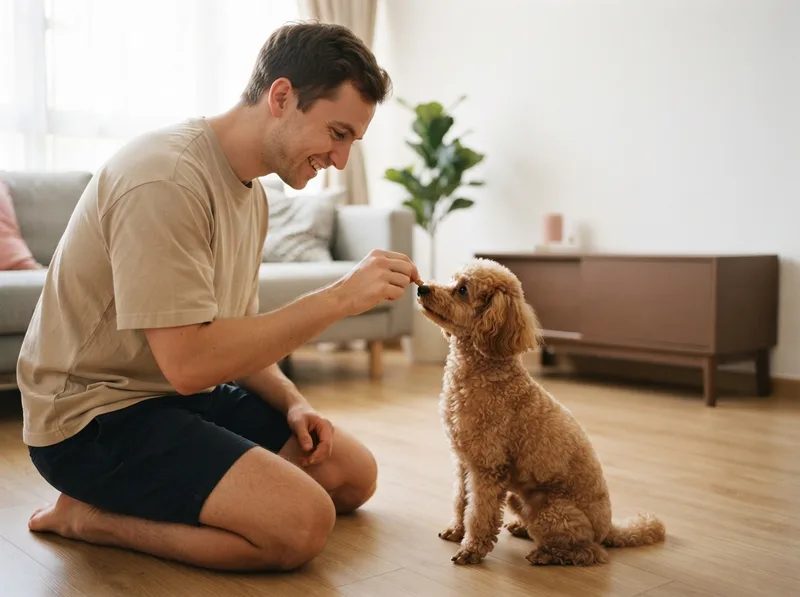
Yes, very. The Poodle is widely ranked the second most trainable breed after the Border Collie, and often picks up a new cue in around five repetitions. Keep sessions short, positive and consistent, and start with house manners before tricks. The one real risk is boredom, not stubbornness.
How do Poodles learn best?
Poodles learn best through reward-based training in short bursts. Mark the behaviour you want with a treat or a click, keep each session to five or ten minutes, and stop while the dog is still keen. This clever breed will happily repeat anything that earns a reward, so you rarely need anything harsher.
Consistency matters more than cleverness. Use the same word and the same hand signal for each cue, and make sure everyone at home uses them the same way. A bright dog spots an inconsistent rule instantly and works the gap. Poodles are also sensitive to tone, so a sharp voice sets training back further than it moves it forward.
Training a Poodle
- Short sessions, 5 to 10 minutes
- Reward-based: mark and treat
- Same cue and signal every time
- House manners before tricks
- End while the dog still wants more
What should I teach a Toy Poodle first?
Teach sit first and come next. Sit is the easiest cue to win, which builds your puppy's confidence and yours. Come is the one that can save its life, and tiny puppies pick up recall more readily than older dogs do. Add settle on a mat and calm greetings once those two are landing.
House manners come before party tricks for a reason. A dog that sits, waits and comes back is easy to live with in a flat; a dog that only shakes a paw is not. In a home with no garden, toilet training runs on pee pads, and our note on potty training in an HDB flat walks through the routine.
How long does it take to train a Toy Poodle?
Basic cues come quickly, but full house training takes months. Most Toy Poodles have sit, come and stay reliable within a few weeks of short daily sessions. Toilet training is the longer road, commonly two to four months, and it moves at the speed of your consistency more than the dog's cleverness.
Do not mistake fast learning for finished learning. A Poodle can perform a cue perfectly in a quiet room and forget it the moment there is a distraction, so practise the same cues in new places before you call them solid. Little and often beats one long weekend session every time.
Why won't my Poodle listen to me?
Almost always because it is bored, not stubborn. The Poodle sits second only to the Border Collie for brains, and that cuts both ways: a clever dog with nothing to do invents its own entertainment, usually chewing or barking. When a Poodle tunes you out, the fix is more mental work, not a firmer hand.
The question I ask every buyer is not who is home all day, it is can you give this dog a job. A Toy Poodle needs its mind worked, not just its legs. Puzzle feeders, snuffle mats, a few minutes of trick training and hiding treats around the room all count. Ten minutes of proper thinking tires a Poodle more than a long plod around the block, and once you get that right, most listening problems quietly disappear.
Give a Poodle a job
- Puzzle feeders and lick mats
- Snuffle mat for meals
- Short daily trick sessions
- Hide-and-find treat hunts
- New cues in new rooms
How do you train a Poodle when it is too hot to walk?
Move the walks to the cooler ends of the day and take the training indoors. Singapore afternoons are often too hot for a small dog with a dense curly coat, so walk in the early morning and the evening, then use brain games inside when the sun is high. Mental work counts as real exercise for this breed.
This is where a Poodle's intelligence pays you back. On a wet or blazing afternoon you can run a full training session in the living room and finish with a genuinely tired dog. Rotate a handful of enrichment toys so they stay novel, and fold short cue practice into everyday moments, before meals and before the leash goes on. For how much a Toy Poodle actually needs to burn off, see our guide to how much exercise a Toy Poodle needs.
Training out the barking your neighbours hear
Poodles are alert-barkers by design, and in an HDB flat that instinct meets a neighbour through every wall. The good news is that most nuisance barking is a training and boredom problem, not a fixed trait. Reward the quiet moments rather than the alarm, acknowledge a genuine alert calmly so the dog knows you have heard, then keep the mind busy so there is less to bark about.
A stimulated Poodle is a quiet neighbour. We cover the triggers and how to teach a reliable quiet cue in our note on why Poodles alert-bark.
From manners to tricks and dog sports
Once the basics are solid, a Poodle will happily take on far more than sit and stay. Tricks, agility and nose work are brilliant outlets for a busy mind, and they double as the mental work that keeps boredom at bay. This is the breed built for the owner who wants to do things with their dog, and a trained Poodle is also the calmer, quieter one, as our temperament and intelligence guide explains.
Every puppy we place comes with a free first lesson from an AVS-certified trainer, so you and your new Toy Poodle start on the same page. Message us on WhatsApp any time and we will point you to the right first steps for your dog.
About the authors
Written by Nelson and Kim
Nelson and Kim run Curious Tails, the AVS licensed pet shop (licence AS24J00046) behind Poodle.sg, at 2 Balestier Road #01-701, Singapore 320002. They have placed 100+ Toy Poodles with Singapore families and give every buyer their WhatsApp line for free care advice, for life. Everything on this page comes from that day-to-day experience, not from a content mill.
Frequently asked questions
How smart are Toy Poodles?
Very. The Poodle is widely ranked the second most trainable breed after the Border Collie, and often masters a new cue in around five repetitions. That is exactly why short, consistent sessions work so well.
How do I train a Toy Poodle puppy?
Use short, positive, reward-based sessions of five to ten minutes. Mark and reward the behaviour you want, be consistent with your cues, start with house manners, and stop while the puppy is still keen.
Are Poodles stubborn?
Not really. If a Poodle ignores you it is usually bored or confused by an inconsistent rule, not stubborn. Make training clear and rewarding and this eager-to-please breed comes right back to you.
What should I teach my Toy Poodle first?
Start with sit, because it is easiest, and come, because it matters most. Add settle on a mat and calm greetings, then move on to tricks once the basics are reliable.
How long does it take to train a Toy Poodle?
Basic cues like sit, come and stay usually click within a few weeks of consistent practice. House training takes longer, roughly two to four months, depending on your routine.
How do I stop my Toy Poodle barking in an HDB flat?
Poodles are natural alert-barkers, so reward quiet rather than the alarm, and keep the dog mentally busy. A stimulated Poodle barks far less; boredom is usually the real cause of the noise your neighbours hear.
Meet your Poodle
Come say hello at Balestier
2 Balestier Road #01-701, Singapore 320002 · Weekdays 12pm–6pm · Weekends 10am–6pm. Or message us first: tell us about your home and routine, and we'll tell you honestly if a Poodle fits.