Behaviour
Toy Poodle separation anxiety: signs, prevention and honest reality
The Poodle is the more independent of Singapore's popular small dogs, but a clever, social dog left alone all day is a different story. Here is how to spot separation anxiety, prevent it, and know when it is a real problem.
Nelson and Kim, Curious Tails · AVS licence AS24J00046 · 14 Jul 2026
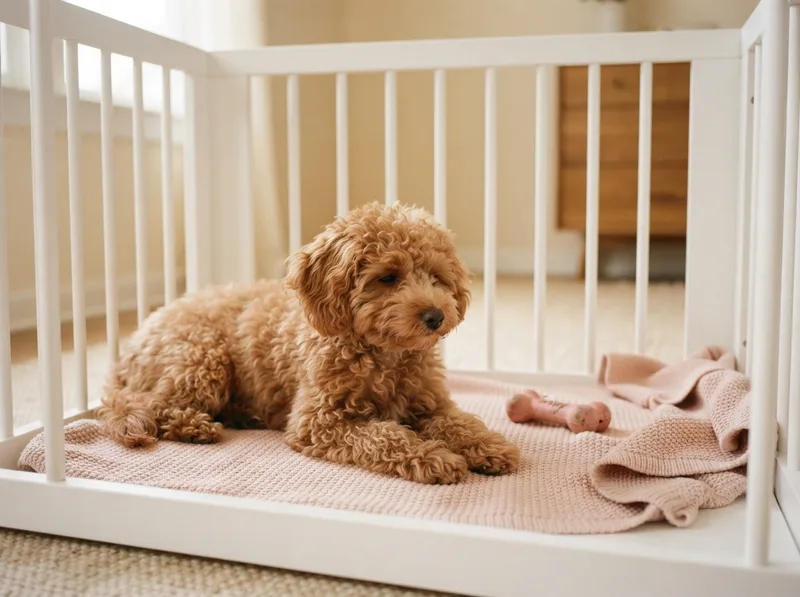
Do Toy Poodles get separation anxiety?
Yes, though less readily than the clingy doodle crosses. A Toy Poodle is independent for a small dog, but it is clever and social, so being left too long, too soon, or with nothing to do is what usually triggers it. The good news is that it is far easier to prevent than to cure.
What does separation anxiety look like in a Poodle?
Separation anxiety shows as real distress the moment you leave, not calm boredom. Watch for barking or howling within minutes, chewing and scratching at doors, pacing, drooling, or toileting indoors from a house-trained dog. A frantic greeting and constant shadowing around the flat are early clues too.
Boredom and anxiety can look alike, so a pet camera is the quickest way to tell them apart. If your dog settles within ten minutes and naps, that is boredom you can enrich away. If it stays agitated the whole time, that is closer to genuine anxiety. Our note on why Poodles bark and how to prevent it covers the vocal side in full.
Signs to watch for
- Barking or howling minutes after you go
- Chewing or scratching at doors and exits
- Pacing, drooling or heavy panting
- Toileting indoors despite being trained
- Frantic greetings and constant shadowing
Why do clever dogs struggle when they are under-stimulated?
A Poodle is one of the most intelligent dog breeds, and a busy mind needs a job. Left with nothing to do, that same cleverness turns into inventive mischief. A bored Poodle is an inventive Poodle, and under-stimulation, not neediness, is the usual root of the problem.
This is where the Poodle differs from its crosses. It is more independent and biddable than a velcro Maltipoo or Cavapoo, but independent does not mean it wants to be alone all day. It is still a people-oriented dog that thrives on training, walks and shared activity.
Before we recommend one, we ask a simple question: can you give this dog a job? That single question decides whether the breed fits your life far better than any breed quiz. Get it right and prevention becomes easy; get it wrong and no amount of enrichment fully makes up for it.
Prevention starts on day one
Prevention beats any cure, and it begins the day your puppy comes home. Resist the urge to shadow it every waking minute. Teach alone time as a normal, boring non-event from the start, so being by itself never feels like a crisis.
Give your puppy a den or crate it actually likes, reward calm settling rather than attention-seeking, and keep those first days low-drama. Enrichment and a walk before you head out, not fuss when you return, set the tone. Build the habit early and you rarely have to fix a problem later.
Prevent it from day one
- Do not shadow the new puppy all day
- Make alone time a boring non-event
- Give a safe den or crate to rest in
- Reward calm, not attention-seeking
- Enrich and walk before you leave
How do you build up alone time?
Build up alone time gradually, never in big jumps. Start with seconds: step out of sight, then return before your dog has any chance to panic. Stretch the absences slowly over days and weeks so calm stays the default and stress never gets a foothold.
Pair every departure with something good, like a stuffed chew or a puzzle feeder, so leaving predicts a treat rather than dread. Keep your comings and goings low-key and dull. A tired dog also rests more easily, so a proper walk and a short training session first help enormously. Here is how much exercise a Toy Poodle actually needs to settle well.
Is it fair to leave a Poodle in an empty HDB flat?
A settled adult Poodle can handle a few hours alone, but all day, every day in an empty flat is not a fair setup for a dog this clever and social. If the household leaves at 8am and returns past 7pm with nothing in between, that is a long, lonely stretch for any people-oriented breed.
There are honest fixes. A midday dog walker, a lunchtime drop-in, or day care breaks up the day. In an HDB flat there is a neighbour dimension too, because a distressed dog barks and barking travels; our guide to living well with a Poodle in an HDB flat covers keeping the peace.
If none of that is realistic, we would rather steer you to a calmer or more independent match than place a social dog into a lonely routine. We would rather talk you out of the wrong breed than sell you the wrong dog.
When should you get professional help?
See a vet first if the behaviour is sudden or severe, to rule out a medical cause, especially in a previously settled dog. For escalating destruction, self-injury, or a dog that will not eat when left alone, get help early rather than waiting it out.
For entrenched cases, a force-free trainer or a qualified behaviourist can build a proper desensitisation plan. One rule matters above all: never punish anxiety, because it deepens the fear and makes everything worse. Steady routine, patience and the right support are what turn it around.
Call in help when
- The change is sudden in a settled dog
- Destruction or self-injury is escalating
- The dog refuses food when left alone
- A vet has ruled out a medical cause
- You need a force-free behaviour plan
About the authors
Written by Nelson and Kim
Nelson and Kim run Curious Tails, the AVS licensed pet shop (licence AS24J00046) behind Poodle.sg, at 2 Balestier Road #01-701, Singapore 320002. They have placed 100+ Toy Poodles with Singapore families and give every buyer their WhatsApp line for free care advice, for life. Everything on this page comes from that day-to-day experience, not from a content mill.
Frequently asked questions
Do Toy Poodles suffer from separation anxiety?
They can, though less readily than the clingier doodle crosses. Poodles are independent for a small breed, but they are clever and social, so being left too long, too soon or with nothing to do is what usually triggers it.
How long can a Toy Poodle be left alone?
A settled adult can usually manage a few hours. All-day, every-day solitude does not suit the breed. A puppy needs company and toilet trips far more often, so long absences are not fair in the early months.
How do I know if my Poodle is anxious or just bored?
Boredom eases with more exercise and enrichment. True anxiety shows as distress the moment you leave: frantic barking, drooling, destruction at doors or toileting indoors. A pet camera is the quickest way to tell which one you are dealing with.
Can I prevent separation anxiety from the start?
Yes, and prevention is far easier than a cure. From day one, teach alone time as a boring non-event, reward calm settling, give a safe den, and build up absences gradually rather than going from constant company to a full workday.
Is a Toy Poodle okay if I work full-time?
Only with help. A midday walker, a drop-in or day care, plus a proper routine of exercise and enrichment, can make it work. A clever dog alone in an empty flat from morning to night is not a fair setup.
When should I get professional help?
See a vet first to rule out a medical cause, especially for a sudden change in a settled dog. If there is escalating destruction, self-injury or refusal to eat when alone, get a vet or a force-free behaviourist involved rather than waiting.
Meet your Poodle
Come say hello at Balestier
2 Balestier Road #01-701, Singapore 320002 · Weekdays 12pm–6pm · Weekends 10am–6pm. Or message us first: tell us about your home and routine, and we'll tell you honestly if a Poodle fits.
Not sure the breed suits your routine?
See how the Poodle's temperament fits real Singapore lives.
Read the temperament guide