Colours
Poodle colours: brown, apricot, red and beyond
Poodles wear one of the widest colour ranges of any breed. Here is the whole palette, the warm shades we actually place in Singapore, and an honest note on how a puppy's coat can lighten as it grows up.
Nelson and Kim, Curious Tails · AVS licence AS24J00046 · 14 Jul 2026
What colours do Toy Poodles come in?
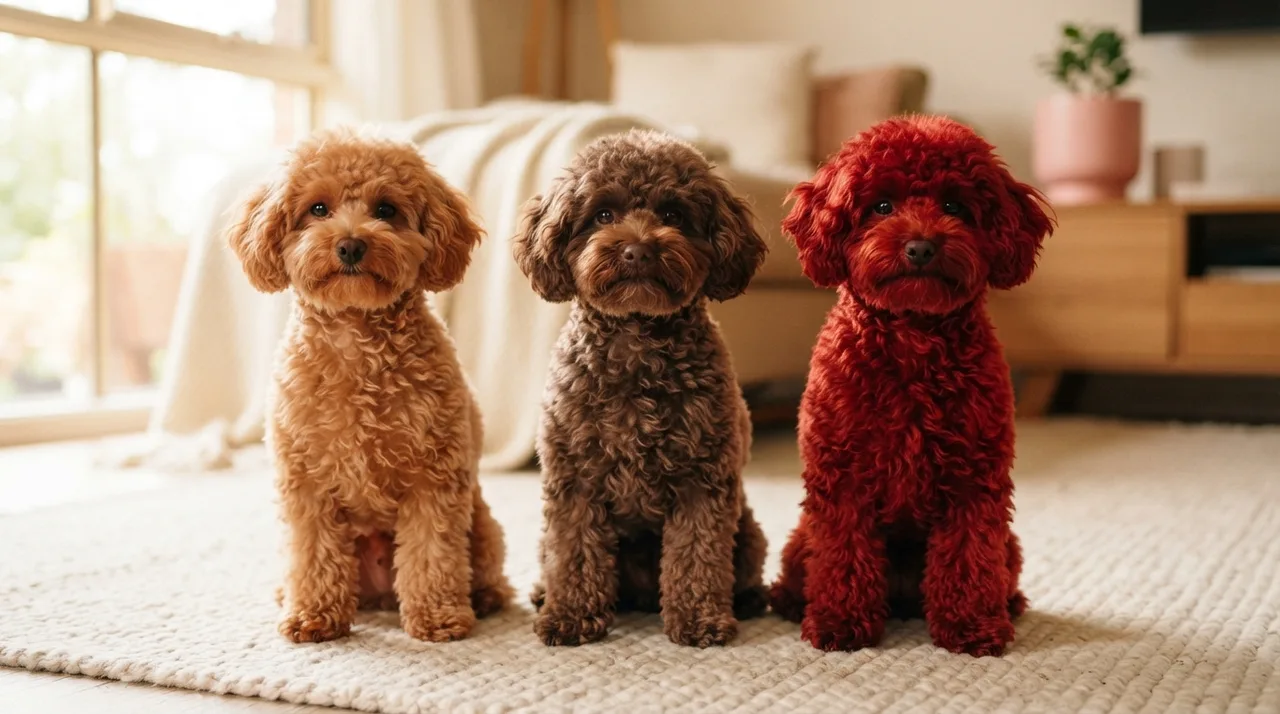
The breed spans black, white, cream, silver, blue, brown, apricot and red, plus patterned coats like parti and phantom. The Toy Poodles we place are warm-toned: apricot, which is our most common, along with brown and red. Apricot and red coats often lighten as the puppy matures.
The colours we place: apricot, brown and red
The Toy Poodles we place come in three warm shades: apricot, brown and red. Apricot is our most common colour, a soft golden coat that suits the teddy bear look Singapore buyers ask for most. Brown and red rotate through as litters arrive, so the exact mix on any given week changes.
Across the 100+ Toy Poodles we have placed, every one sits in the same all-in range whatever its shade. Availability shifts week to week, so message us on WhatsApp for the colours in right now and current photos of the actual puppy, never a stock image. You can also see the Toy Poodles we have now.
Our Toy Poodle colours
- Apricot, our most common shade
- Brown, a deep cocoa coat
- Red, the boldest warm tone
- Same all-in price for every colour
- Availability changes weekly, just ask
Brown Poodles: the deep-cocoa coat explained
A brown Poodle is a solid liver-brown Poodle, from deep chocolate through to a lighter walnut. True brown shows in more than the coat: the nose, eye rims and paw pads are liver-coloured, and the eyes are a dark amber rather than near-black. That pigment is the reliable tell, because coat shade alone can mislead you at eight weeks.
Brown is less commonly seen than apricot in Singapore, which makes a good one quietly striking. Temperament has nothing to do with colour: a brown Toy Poodle is the same clever, biddable, job-wanting dog as any other. It learns fast, moves like a small athlete, and needs its mind kept busy.
Spotting a true brown
- Coat: chocolate through to walnut
- Nose and paw pads: liver, not black
- Eyes: dark amber
- Often clears towards cafe au lait
- Rarer than apricot in Singapore
What is a brown Poodle called? Brown, cafe au lait and silver beige
A brown Poodle goes by different names as its coat lightens. A rich, unfaded brown is simply called brown. When it softens to a milky, lighter shade it is described as cafe au lait, and a brown that greys out over time is called silver beige.
One brown puppy can mature into any of the three, which is why the nose and eye colour matter more than the coat at eight weeks. Check for the liver nose and amber eyes and you are looking at a genuine brown, whatever the final tone settles at. These names describe the same coat at different stages, not separate colours.
Apricot and red: the two warmer coats
Apricot is a soft golden Poodle coat, ranging from a pale cream-gold to a shade that borders on red. It is our most common colour and the classic choice for a teddy bear cut, which is part of why local buyers love it. Apricot also tends to clear a touch paler as the puppy grows.
Red is the boldest of the warm coats, a deep mahogany-to-ginger that the breed only formally recognised in 1980. It carries the highest demand and the lowest supply of the three, so it pays to ask early. Red is also the most likely of our shades to soften towards apricot over the first couple of years.
Apricot and red at a glance
- Apricot: pale cream-gold to near-red
- Apricot: our most common shade
- Red: deep mahogany to ginger
- Red: highest demand, ask early
- Both often lighten as they mature
The full Poodle palette: colours we do not place
Across the breed, Poodles wear one of the widest colour ranges of any dog. Beyond our warm trio you will find solid black, the most common colour breed-wide, plus white, cream, silver, blue and grey. Silver, blue and grey puppies are usually born black and clear to their adult shade over one to two years.
There are patterned coats too: parti is white with solid patches, phantom carries tan points like a Dobermann, and sable has dark-tipped hairs. These are lovely, but they are not what we place, so if your heart is set on one we will tell you honestly rather than pretend to stock it. The breed's recognised colour range is broad, and the shade never changes what kind of dog you are getting.
Rarest, most popular, most expensive: what colour really changes
Colour rarity and colour price are two different questions, and the honest answers surprise people. Black is the most common Poodle colour breed-wide, while warm shades like apricot dominate the Toy market here; true deep reds and patterned parti or phantom coats are the least common. Rarity, though, is not the same as better.
Some sellers charge a premium for a fashionable or rare shade. We do not: every colour we place sits in the same $3,488–$5,988 all-in range, with no colour surcharge. What moves the price within that band is size, age and lineage quality, not the coat, and the full breakdown is in our Toy Poodle price guide.
Colour and price, honestly
- Black: most common breed-wide
- Apricot: most popular in the Toy market
- Red, parti, phantom: least common
- Same all-in price for every shade
- No colour surcharge, ever
Why your puppy's colour will probably change
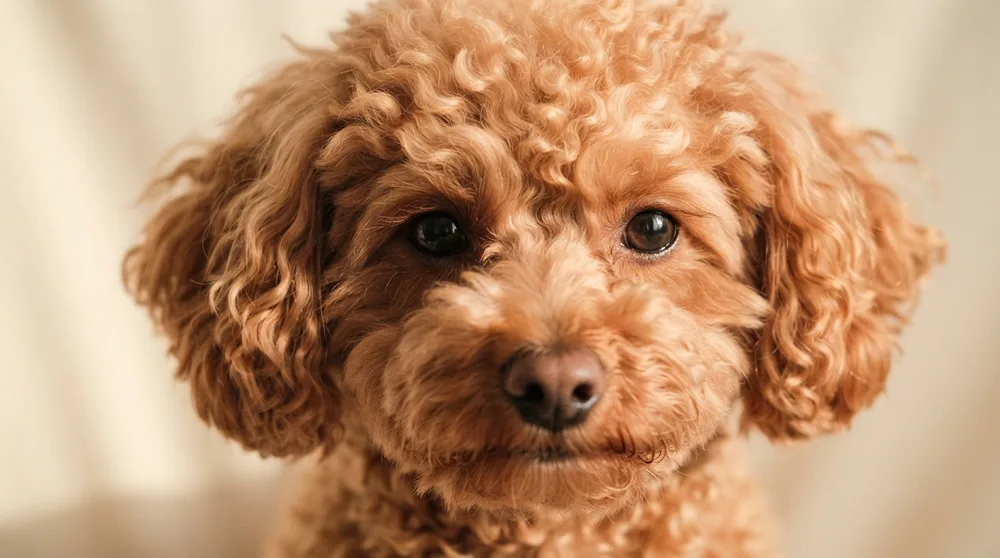
Clearing is the natural process where a Poodle's coat lightens as it matures. It happens across the first 18 to 24 months, driven by inherited coat genetics passed down from the parents. It is completely normal and not a fault, so the eight-week photo is rarely the exact adult shade.
Red often softens towards apricot, apricot pales, and a brown can mellow to cafe au lait. Singapore's strong sun adds a second, non-genetic layer: an outdoor-heavy routine can bleach the tips of a dark coat. If an exact adult colour matters to you, ask to see the parents' colours, and read why Poodle puppies change colour as they grow before you fall for a shade.
What clearing looks like
- Lightens over the first 18 to 24 months
- Inherited from the parents, not a defect
- Red to apricot, apricot paler, brown to cafe au lait
- SG sun can bleach dark coat tips
- We show the parents' colours, just ask
Does colour change a Poodle's health, temperament or price?
Colour has no bearing on a Poodle's health, temperament or price. Every shade is the same intelligent, trainable, alert little dog, and there are no colour-linked health issues among the apricot, brown and red coats we place. Every puppy leaves with the same vet health check, microchip and vaccination records whatever its colour.
So choose the shade you love, then judge the puppy on how sound and well raised it is. A well-bred apricot and a well-bred red are equally good dogs, and a healthy purebred with clear parentage matters far more than a fashionable coat. Colour is the last thing on our list when we place a puppy, and it should be near the last on yours.
Living with each colour, day to day
Colour changes very little about daily care, but it does change what you notice. Light coats like apricot show tear stains and pavement dust sooner, so a paler face needs a quick daily wipe to stay clean. Dark coats like brown and red hide dirt well, but they also hide forming mats, so you find those with your fingers, not your eyes.
The routine itself is identical across every shade: regular line brushing at home plus a salon visit every four to six weeks in Singapore's humidity. That, not the colour, is the real commitment of Poodle ownership. Our grooming guide walks through the home routine that keeps any coat mat-free between salon visits.
Colour and daily care
- Apricot: shows tear stains, wipe the face daily
- Brown and red: hide dirt, and hide mats
- Every colour: the same brushing routine
- Salon every 4 to 6 weeks in the humidity
- The routine is the commitment, not the shade
How to choose your Poodle's colour
Choosing a colour comes down to a few honest questions. If the exact adult shade matters to you, ask to see the parents' colours, because clearing means the puppy will likely mature a little lighter than its photo. If you simply love a particular puppy, expect a softer grown-up version of what you see today.
Torn between two shades you like? Meet the puppies and let personality decide, since a Poodle's temperament will shape your next fifteen years far more than its coat. And if you have your heart set on a colour we do not place, we will say so plainly rather than talk you into something else. We would rather point you to the right dog than sell you the wrong one.
Buying from a licensed shop, whatever the colour
Colour is also where unlicensed sellers do their best marketing, dressing up a rare shade to distract from missing paperwork. The protection that actually matters is not the coat: it is the vet health check, the microchip, the vaccination records and honest parentage that come with a licensed purchase. Every puppy we place is a purebred Toy Poodle with transparent parentage.
You can verify us in a minute on the AVS public registry of licensed pet shops: we are listed as Curious Tails, licence AS24J00046. Whatever colour you fall for, check the seller before you pay anyone. A rare-colour advert with no licence behind it is the oldest trick in the book.
Keep exploring
About the authors
Written by Nelson and Kim
Nelson and Kim run Curious Tails, the AVS licensed pet shop (licence AS24J00046) behind Poodle.sg, at 2 Balestier Road #01-701, Singapore 320002. They have placed 100+ Toy Poodles with Singapore families and give every buyer their WhatsApp line for free care advice, for life. Everything on this page comes from that day-to-day experience, not from a content mill.
Frequently asked questions
What colours do your Toy Poodles come in?
We place warm-toned Toy Poodles: apricot, our most common, along with brown and red. Availability changes week to week, so message us on WhatsApp for what is in right now.
What is a brown Poodle called?
A solid brown Poodle has a liver-brown coat, liver-coloured nose and dark amber eyes. When the coat lightens with age it may be described as cafe au lait, and a brown that silvers out is called silver beige.
What is the rarest Poodle colour?
Patterned coats such as parti and phantom, plus true deep reds, are the least common. Breed-wide, black is the most common colour; in the Toy market warm shades like apricot lead. We focus on apricot, brown and red rather than rarity.
Does a rare colour cost more?
Some sellers charge premiums for fashionable shades. We do not: every colour we place sits in the same $3,488–$5,988 all-in range. Price moves with size, age and lineage quality, not the coat colour.
Do Poodle puppies change colour as they grow?
Usually, yes. Poodles clear, meaning the coat lightens across the first 18 to 24 months. Red often softens towards apricot, apricot pales, and brown can mellow towards cafe au lait. It is inherited coat genetics, completely normal, and not a fault.
Does colour affect a Poodle's health or temperament?
No. Every shade is the same intelligent, trainable Poodle, and there are no colour-linked health issues among the apricot, brown and red coats we place. Every puppy is vet-checked, microchipped and comes with vaccination records.
Can I request or reserve a specific colour?
Yes. Tell us on WhatsApp what you are hoping for and we will let you know honestly what is available, what is coming, and if a shade is not one we place. Red tends to have the longest wait.
Which colour shows tear stains and dirt the most?
Lighter coats. Apricot shows tear staining and city dust sooner than brown or red, while dark coats hide dirt but also hide forming mats. Whatever the shade, the routine is the same: regular line brushing and a salon visit every four to six weeks.
Meet your Poodle
Come say hello at Balestier
2 Balestier Road #01-701, Singapore 320002 · Weekdays 12pm–6pm · Weekends 10am–6pm. Or message us first: tell us about your home and routine, and we'll tell you honestly if a Poodle fits.
New to Poodle coats?
Whatever colour you pick, the coat needs the same routine. Here is how to keep it mat-free.
Read the grooming guide