Coat
Why Poodle puppies change colour as they grow
Brought home a rich apricot puppy that is turning pale gold? That is normal. Poodles are famous for clearing, and the coat you see at eight weeks is rarely the adult shade. Here is what is happening and what to expect.
Nelson and Kim, Curious Tails · AVS licence AS24J00046 · 14 Jul 2026
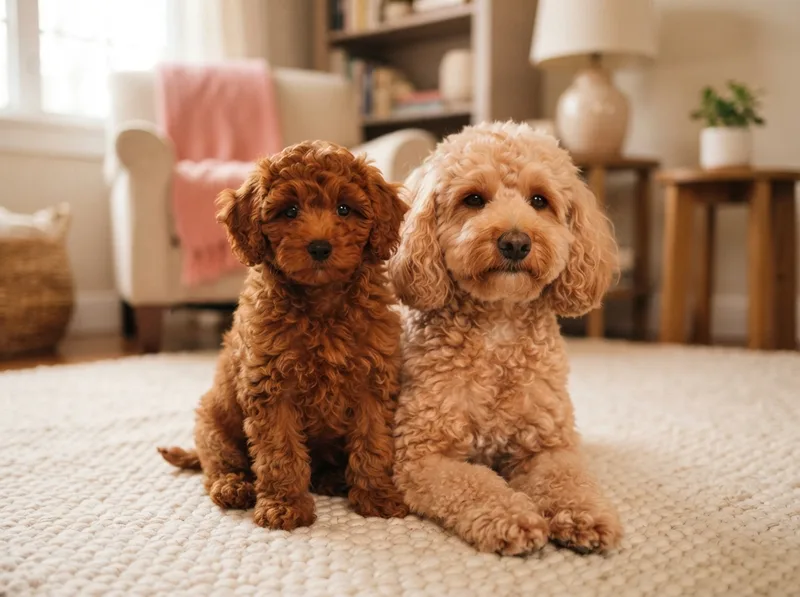
Why is my Poodle puppy changing colour?
Your Poodle is clearing, which means the coat lightens as the dog matures. An apricot puppy can soften to pale gold, a red can mellow towards apricot, and a brown can lighten to cafe au lait over the first 9 to 24 months. It is driven by inherited coat genetics, is completely normal, and has nothing to do with health.
What clearing looks like
Clearing is the gradual lightening of a Poodle's coat as it grows up. The change is not sudden. You will usually notice the new, paler shade coming in first around the roots and across the body, while the ears, tail and the thicker guard hairs hold the deeper colour longest. That uneven fade is normal, not patchy shedding.
The warm shades move the most. Apricot often softens to a pale gold, red tends to mellow towards apricot, and brown can lighten to a warmer cafe tone. Black and white generally hold truer, though a black coat can clear towards a faint blue, grey or silver cast in some dogs.
What to expect by colour
- Apricot: often softens to pale gold
- Red: tends to mellow towards apricot
- Brown: can lighten to a warmer cafe
- Black and white: usually hold truer
- Roots and body lighten before ears and tail
When does a Poodle's colour settle?
Most of the colour change happens over the first 9 to 24 months. The coat does the bulk of its lightening in that window, then a minor settling can carry on towards roughly age three before the adult shade holds. The eight-week photo is almost never the final colour.
This is why an early puppy picture can mislead you. A deep, saturated coat at two months is likely to mature a shade or two lighter. If you have your heart set on the exact tone you saw first, expect a softer grown-up version of it rather than a perfect match.
The clearing timeline
- Bulk of change: first 9 to 24 months
- Minor settling: on towards age three
- Eight-week coat: rarely the adult shade
- Deeper puppy coats lighten the most
- Adult shade usually paler than the photo
Why does a Poodle's coat clear at all?
Clearing is inherited. A Poodle carries coat genetics passed down from its parents, and those genes decide whether a shade holds or fades and by how much. It is a normal feature of the breed, not a fault, an illness or a sign of poor care, so there is nothing to fix and nothing to worry about.
Because the trait is passed through the lines, surprises are common even for people who know their dogs well. Two apricots can produce a puppy that clears to cream. The genetics set the direction, but the exact end point is rarely certain until the coat has finished maturing.
Can you predict the adult colour from the parents?
The parents' adult colours are the single best clue to how a puppy will mature. Not their puppy photos, their grown-up coats, because a puppy inherits the same tendency to hold or clear that its parents did. Ask what shade each parent settled at, and you have a realistic sense of where an apricot or red will land.
A breeder who knows their lines can narrow it further from experience with earlier litters. Look at the guard hairs and the ears too, since those hold the truest colour on the puppy in front of you. It is still an estimate, not a guarantee, but it beats guessing from a two-month coat.
What to ask before you decide
- What colour did each parent settle at?
- How did earlier litters clear?
- Check the ears and guard hairs
- Expect a lighter adult than the photo
- Treat any prediction as an estimate
The Singapore sun adds a second layer
On top of the genetics, Singapore's strong sun bleaches coats. Sun exposure lightens the tips of a dark coat, and that fading is separate from clearing: it is environmental, not inherited. A red or brown that spends a lot of time outdoors in the midday glare can look lighter than a littermate kept to shadier walks.
You cannot stop clearing, but you can slow the sun-bleaching. Walk in the cooler mornings and evenings, keep midday outings shorter, and stay on top of coat condition, since a well-kept coat holds tone better than a dry, sun-battered one. Our grooming routine covers the home care that keeps any shade looking its best.
Should colour decide which puppy you pick?
Colour should be near the last thing on your list, not the first. A Poodle's shade has no bearing on its health, its temperament or its price, and every colour is the same clever, job-wanting little dog. Across the 100+ Toy Poodles we have placed, every shade sits in the same all-in $3,488–$5,988 range, with no colour surcharge, ever.
So choose the puppy that is sound and well raised first, then enjoy whatever the coat becomes. If a specific adult tone genuinely matters to you, ask about the parents' colours before you commit. You can see the warm shades we place, apricot, brown and red, on our colours guide, and message us on WhatsApp for the colours in right now.
About the authors
Written by Nelson and Kim
Nelson and Kim run Curious Tails, the AVS licensed pet shop (licence AS24J00046) behind Poodle.sg, at 2 Balestier Road #01-701, Singapore 320002. They have placed 100+ Toy Poodles with Singapore families and give every buyer their WhatsApp line for free care advice, for life. Everything on this page comes from that day-to-day experience, not from a content mill.
Frequently asked questions
Do all Poodles change colour?
Many do, especially apricot, red and brown coats, which tend to lighten. It is called clearing and is a normal part of the breed's coat genetics.
At what age does a Poodle's colour settle?
Most of the change happens over the first 9 to 24 months, with minor settling sometimes continuing towards age three. The adult shade is usually lighter than the puppy coat, particularly in apricot and red.
Will my apricot Poodle stay apricot?
It may soften to a paler gold. Apricot is one of the shades most likely to clear. Ask what colour the parents settled at for the best guide to the adult shade.
Can you predict a Poodle puppy's adult colour?
Not exactly, but the parents' adult colours are the best clue, since the puppy is likely to mature a little lighter. A breeder who knows their lines can narrow it down.
Does colour change mean something is wrong?
No. Clearing is normal and has nothing to do with health. Choose your puppy on soundness and temperament, not on holding an exact shade.
Can Singapore's sun change my Poodle's coat?
Yes. Strong sun can bleach the tips of a dark coat, a non-genetic effect on top of clearing. An outdoor-heavy routine can lighten a red or brown a little faster, so favour cooler morning and evening walks.
Meet your Poodle
Come say hello at Balestier
2 Balestier Road #01-701, Singapore 320002 · Weekdays 12pm–6pm · Weekends 10am–6pm. Or message us first: tell us about your home and routine, and we'll tell you honestly if a Poodle fits.
See our colours
The apricot, brown and red Toy Poodles we place, and what to expect as they grow.
See Poodle colours